Updated May 16, 2026
Teaching tech literacy in the next generation
Educator: structured exercise to build student habits around AI as collaborator, not oracle.
Helping students treat AI as a collaborator rather than a replacement for chemical reasoning is the difference between graduates who can validate their tools and graduates who blindly trust them. This tutorial walks through a structured exercise to build that habit.
The exercise
- Pick a known target. Choose a textbook synthesis or a paper the class has studied. Do not tell students what the published route is.
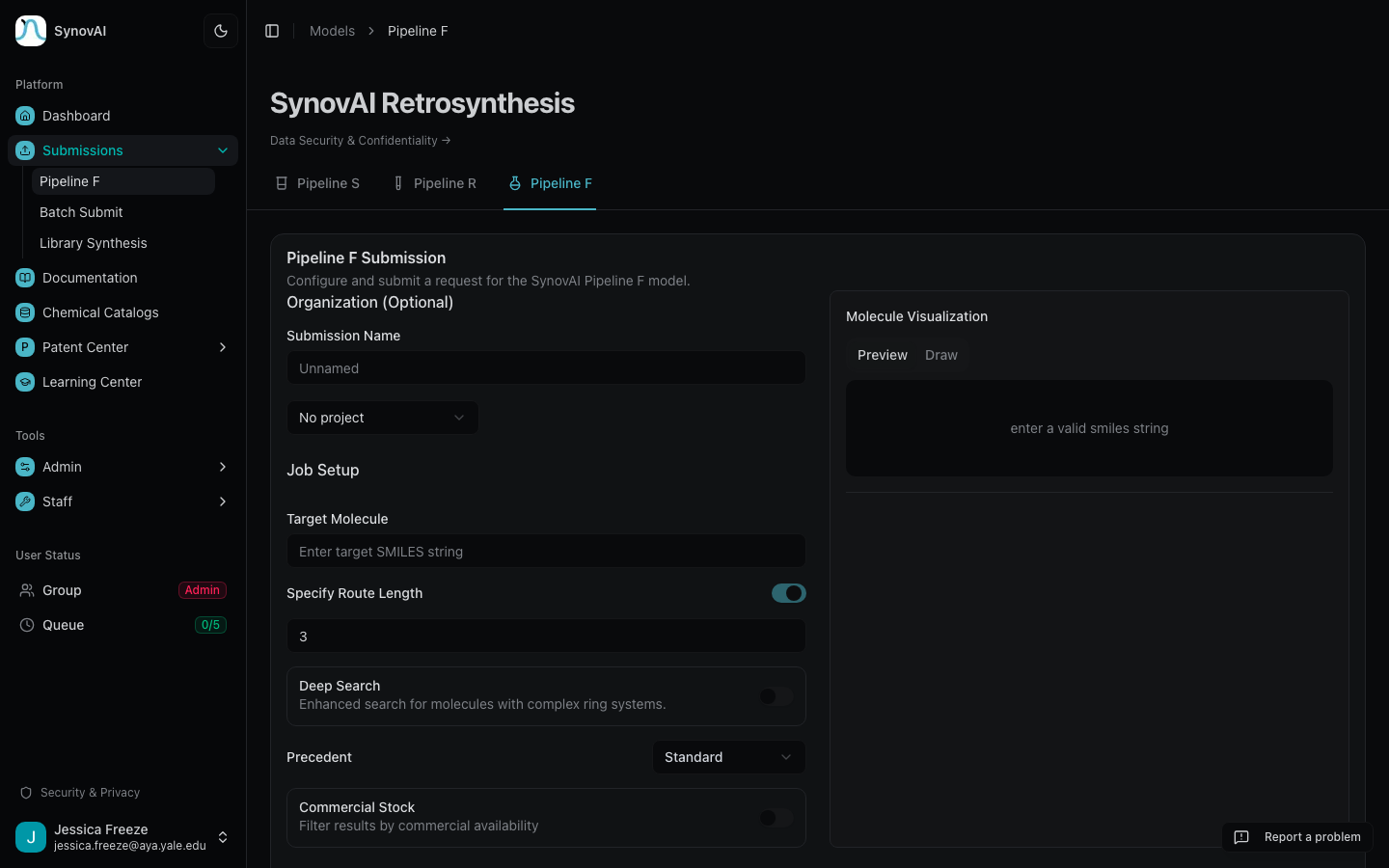
- Have each student submit the target. They run a retrosynthesis themselves. They examine the confidence and reference counts on the top routes.
- Ask each student two questions:
- Which of the model's routes most closely matches the published synthesis (which they look up at the end)?
- Which model-suggested route is better than the published one, if any, and why?
- Group discussion. Compare the model's top routes to the published one. Where they agree, why? Where they diverge, what's the chemistry argument for each path? When does the model's confidence score align with sound chemical intuition, and when doesn't it?
- Wrap with a meta-lesson. Confidence is a model-internal number, not ground truth. The student's reasoning about why a step is plausible should always anchor the evaluation, with the model as a brainstorming partner, not an oracle.
Why this works
Students learn the platform AND learn epistemic humility about AI tools. Both transfer to their wet-lab practice and to any AI-assisted research they encounter post-graduation.