Updated May 16, 2026
Freedom-to-operate route analysis
Patent attorney: tier alternative routes by IP risk using per-step patent references.
For manufacturing decisions, the relevant question is not "is the target patented" but "is the route I want to use patented." This tutorial generates multiple alternative routes and uses the patent references on each step to assess freedom-to-operate at the synthetic-method level.
Steps
- Submit the target with Specify Route Length unchecked, or submit at multiple route lengths (3, 4, 5, 6). The goal is to surface a wide alternative-route set, not to find the single best route.
- For each finished result, walk every step. Open the reference
entries and note:
- The earliest filing date associated with the transformation.
- Any active (unexpired) patent in the reference list.
- Any references that are clearly non-proprietary: pre-2000 publications, expired patents, well-established methods in textbook chemistry.
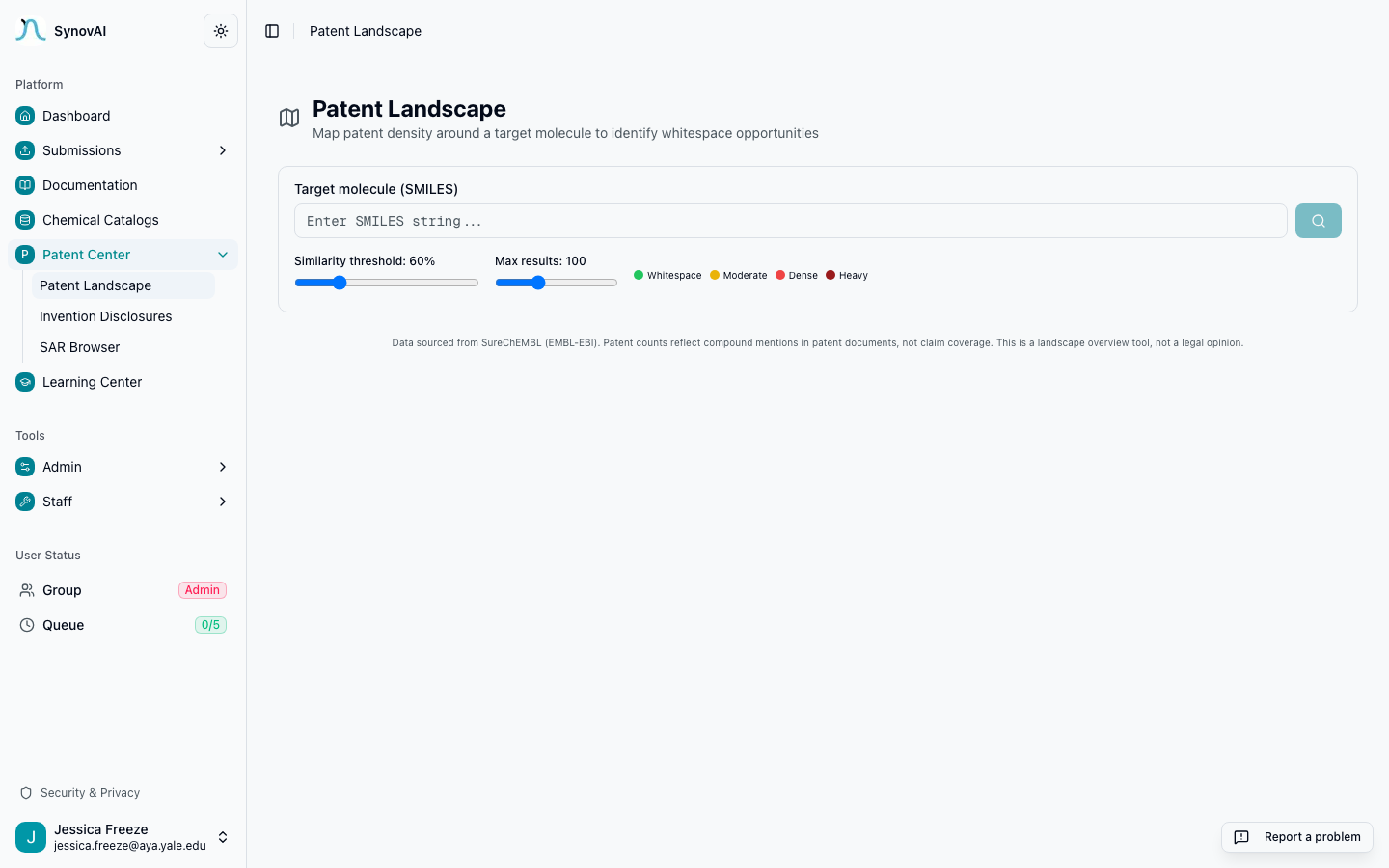
- Apply Patent Landscape to the target itself for compositional whitespace context.
- Tier each candidate route:
- Low IP risk: every step has expired or non-proprietary references; intermediates appear in whitespace.
- Moderate IP risk: at least one step has active patent references that look avoidable via swap.
- High IP risk: multiple steps tied to active patents from a small set of assignees. Avoid for manufacturing.
- Pick the lowest-risk viable route. Document the chosen disconnections and their references for counsel review.